
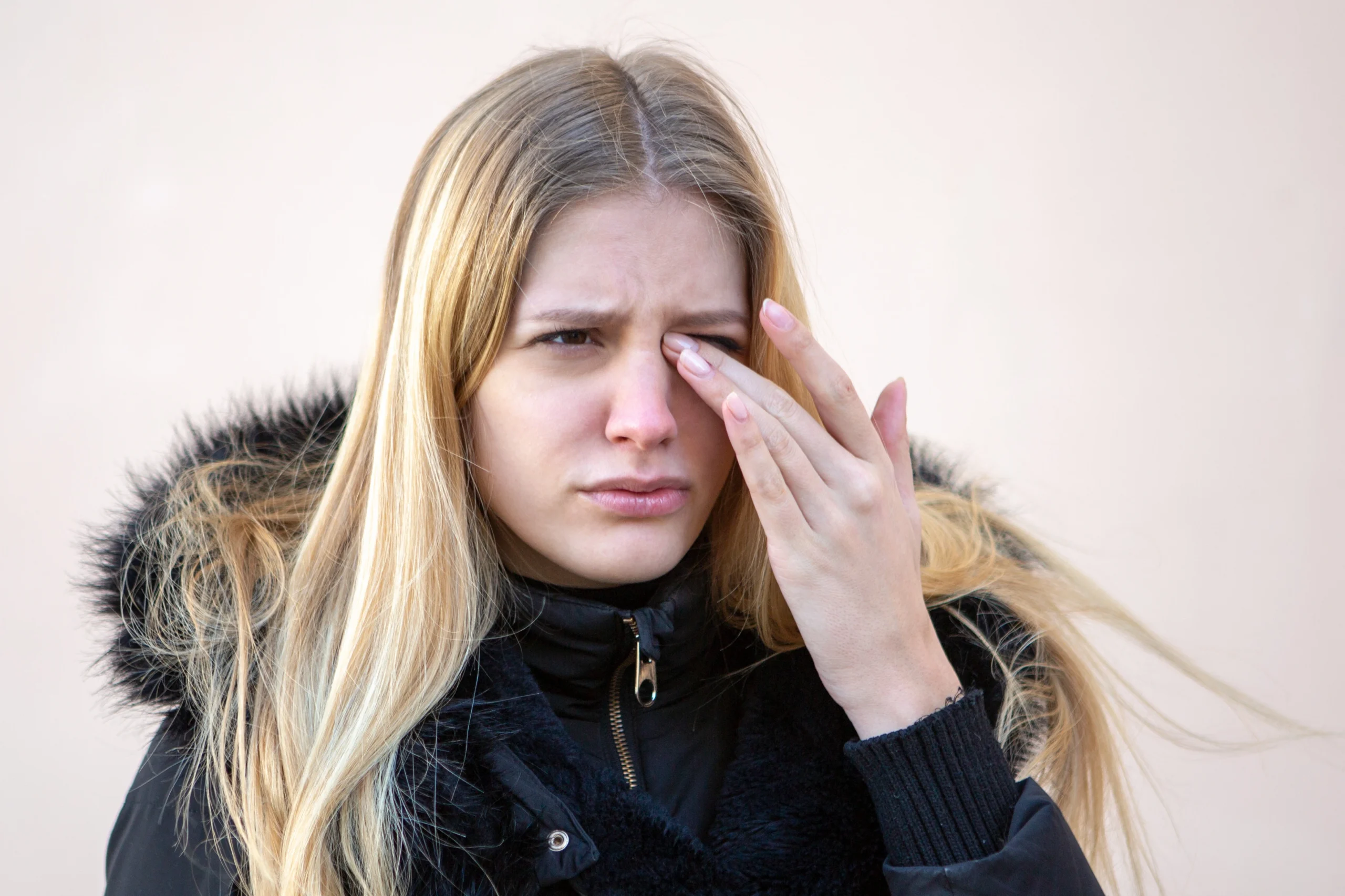
Dry, scratchy eyes can sneak up on you. It’s easy to assume it’s “just allergies” or too much screen time, but persistent dryness can be your eyes’ way of asking for a closer look. A comprehensive eye exam can help connect the dots between your daily discomfort and what’s happening on the surface of your eyes (and sometimes, elsewhere in your health).
In this blog, we’ll explore how certain medical conditions can contribute to dry eye and what you can do to feel better, see more clearly, and stop constantly thinking about your eyes.
Dry eyes: annoyance or signal?
Occasional eye dryness happens to everyone. But if your symptoms keep returning or your usual routine stops working, it may not be just your environment.
Common dry eye symptoms include:
- Burning, stinging, or a gritty “sand in the eye” feeling
- Watery eyes (excess tearing can be a reaction to dryness)
- Redness or sensitivity to wind, smoke, or light
- Stringy mucus or crusting along the lashes
- Fluctuating blur, especially after reading or screen use
- Contact lens discomfort or reduced wearing time
If this sounds like you, you might want to put down the eye drops and schedule an appointment with an eye doctor.
What medical conditions trigger dry eye?
Dry eye isn’t always caused by “not enough tears.” Sometimes it’s poor tear quality, inflammation, or glands that aren’t doing their job. Certain health conditions can shift those systems over time.
Here are a few common medical contributors:
Autoimmune conditions
Conditions like Sjögren’s syndrome, rheumatoid arthritis, lupus, and thyroid disease can affect moisture-producing glands and increase inflammation.
Diabetes
Blood sugar changes can impact corneal nerves and tear production, leading to dryness, irritation, and variable vision.
Rosacea and skin inflammation
Facial rosacea often goes hand-in-hand with eyelid inflammation and meibomian gland dysfunction (blocked oil glands), which causes tears to evaporate too quickly.
Allergies (and allergy meds)
Allergies can irritate the ocular surface, and some antihistamines can reduce tear production.
Hormonal shifts
Pregnancy, perimenopause, menopause, and thyroid imbalance can all influence tear stability and eyelid gland function.
Why eye drops may not be enough
Over-the-counter eye drops can absolutely help, especially preservative-free lubricating drops used consistently. But if dryness is tied to inflammation, eyelid gland issues, or a systemic condition, drops alone may feel like constantly refilling a leaky bucket.
A few reasons you might not be getting relief:
- You’re using a redness reliever (which can worsen dryness over time)
- Preservatives are irritating your eyes with frequent use
- The main issue is evaporative dry eye from clogged oil glands
- Underlying inflammation needs targeted treatment
If you’ve tried drops and still feel uncomfortable, it’s worth getting answers instead of continuing the trial-and-error loop.
What to expect during a dry eye evaluation
Dry eye care works best when it’s tailored. During your visit, your eye doctor may look at:
- Tear quality and how quickly tears evaporate
- Eyelid margins and oil gland function
- Inflammation or allergic signs on the ocular surface
- Corneal staining (tiny dry spots that show up with dye)
- Contact lens fit and wear habits (if relevant)
- Medication and health history that may be contributing
A thorough exam can help separate “simple dryness” from dryness that needs a more layered approach.
Get back to comfortable, clear vision
Dry eyes can be stubborn, especially when a medical condition is part of the picture. But you don’t have to guess your way through it. If your symptoms are lingering, worsening, or interfering with work, driving, reading, or contacts, it’s time to get a clearer explanation and a plan that matches your life. Schedule an appointment at New England EyeWorks in Keene to talk about your symptoms and get personalized care.