
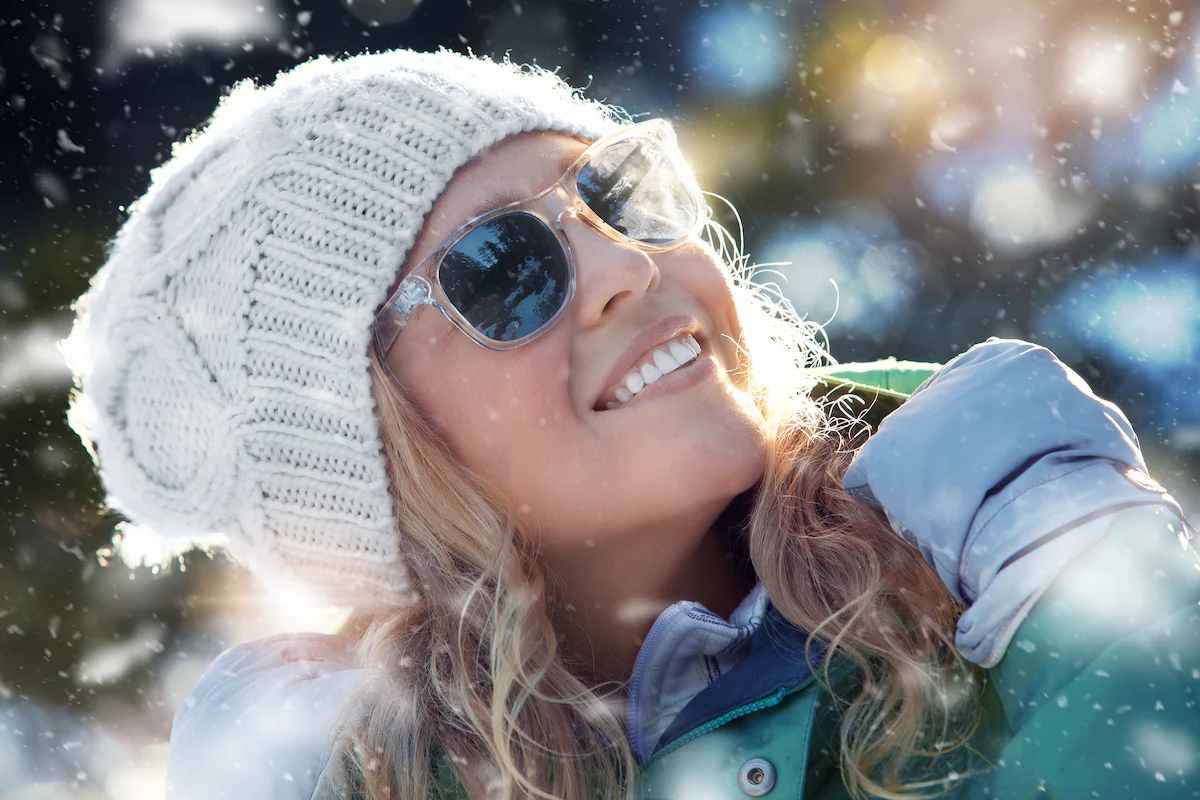
Sunglasses are an obvious essential on bright summer days, but winter eye protection matters just as much. UV rays are present throughout the year, and winter conditions can create intense glare that makes outdoor time uncomfortable and less safe.
Whether you are driving, walking, skiing, or running errands, sunglasses can help protect your eyes from UV exposure while improving visual comfort.
UV exposure does not stop when temperatures drop
Cold weather does not block ultraviolet radiation. UVA and UVB rays can reach your eyes on sunny and cloudy winter days alike. Over time, unprotected UV exposure may raise the risk of certain eye conditions, including cataracts and growths on the eye’s surface. It may also contribute to premature aging of the skin around the eyes.
Winter sun protection is particularly important during:
- Outdoor sports and recreation
- Driving during morning or late-afternoon sunlight
- Walks on bright days
- Time spent near snow, ice, or water
- Higher-elevation activities
A brimmed hat provides helpful shade, but it cannot protect your eyes from reflected light or rays entering from the sides.
Snow reflects sunlight and intensifies glare
Fresh snow can reflect a significant amount of sunlight, directing bright light back toward your eyes. This glare can make you squint, strain to see details, and experience eye fatigue or headaches.
Glare can also reduce contrast, making it harder to notice:
- Icy patches or uneven ground
- Changes in road conditions
- Lane markings and traffic signals
- Pedestrians, cyclists, or other vehicles
Polarized lenses can help reduce glare reflected from snow, ice, wet roads, and other flat surfaces. This can be especially useful for driving and outdoor winter activities.
Winter driving can be hard on your eyes
The lower position of the sun during winter can place bright light directly in your line of sight, especially during early-morning and late-afternoon commutes. Reflections from snow or wet pavement can add another layer of glare.
Keeping sunglasses in your car or bag makes it easier to be prepared. If you wear prescription eyeglasses, prescription sunglasses allow you to see clearly outdoors without giving up UV protection.
What should you look for in winter sunglasses?
Dark lenses are not automatically protective. Choose lenses labeled to block 100% of UVA and UVB rays. Lenses that only make the world appear darker without UV protection may cause your pupils to widen, allowing more harmful light into the eye.
Look for sunglasses with:
- 100% UVA and UVB protection
- A comfortable fit that provides good coverage
- Polarized lenses if glare is a concern
- Prescription lenses when needed for clear distance vision
- A style you will be comfortable wearing regularly
Both prescription and non-prescription options can support comfortable, clear vision outside.
Protect your eyes in every season
Winter sunglasses are not only for ski trips or exceptionally sunny days. Wearing them regularly can help reduce glare, improve comfort, and protect your eyes during everyday outdoor activities.
Make sunglasses part of your winter routine — your eyes need protection in January just as much as they do in July.